October 7, 2025
Long before we learn a country’s language, we taste it. Food is the world’s oldest storyteller — a record of what a community values, celebrates, and shares. To eat in a new place is to learn its history through flavor, to understand its people through preparation, and to feel its geography through what grows from the soil.
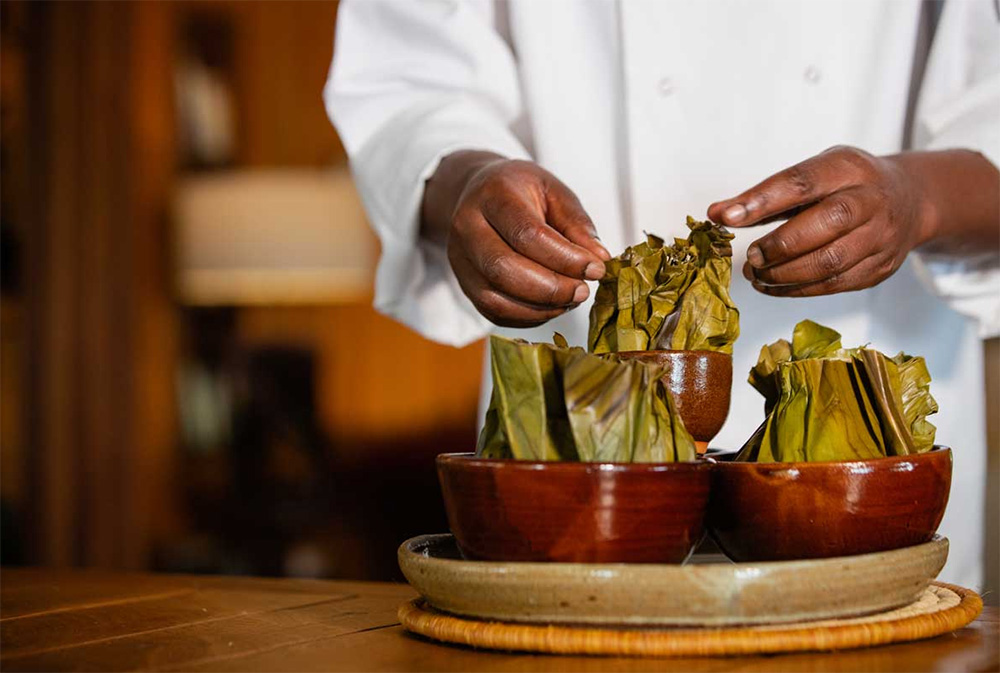
When you travel, every dish becomes a conversation. A breakfast of tropical fruit tells of rich volcanic soil and sun-soaked hillsides. A bowl of luwombo speaks of slow cooking and tradition, of recipes passed from grandmothers to granddaughters. Even a roadside chapati rolled with eggs reveals a blend of Indian influence and Ugandan ingenuity.
The Cultural Language of Food
Eating locally is one of the simplest ways to connect deeply with a place. It reminds you that culture isn’t only seen — it’s tasted. Across Uganda, meals are communal and generous; food is meant to be shared, not rushed. This is why hospitality here feels instinctive — when you sit down to eat, you’re part of the family. The beauty of food is that it bypasses translation. You might not know the words for “thank you,” but finishing your plate, smiling, or asking for seconds communicates the same thing. Dining becomes both nourishment and exchange.Why Local Matters
Choosing local food does more than please your palate — it sustains local economies and ecosystems. Ingredients grown nearby mean fresher flavors and fewer transport emissions. It also keeps culinary heritage alive in an age where globalized menus threaten to flatten what makes each region unique. So, when you travel, ask what’s fresh, what’s in season, what’s made by hand. Order the special you can’t pronounce. Step into the unknown with your fork — it’s the easiest way to learn something new.How to Eat Like a Traveler, Not a Tourist
- Follow the locals. Where there’s laughter and aroma, there’s good food.
- Ask for the story behind a dish. You’ll get culture with your meal.
- Be patient. Authentic food takes time — and that’s part of its beauty.
- Try something daily that surprises you. Even a new fruit counts.